
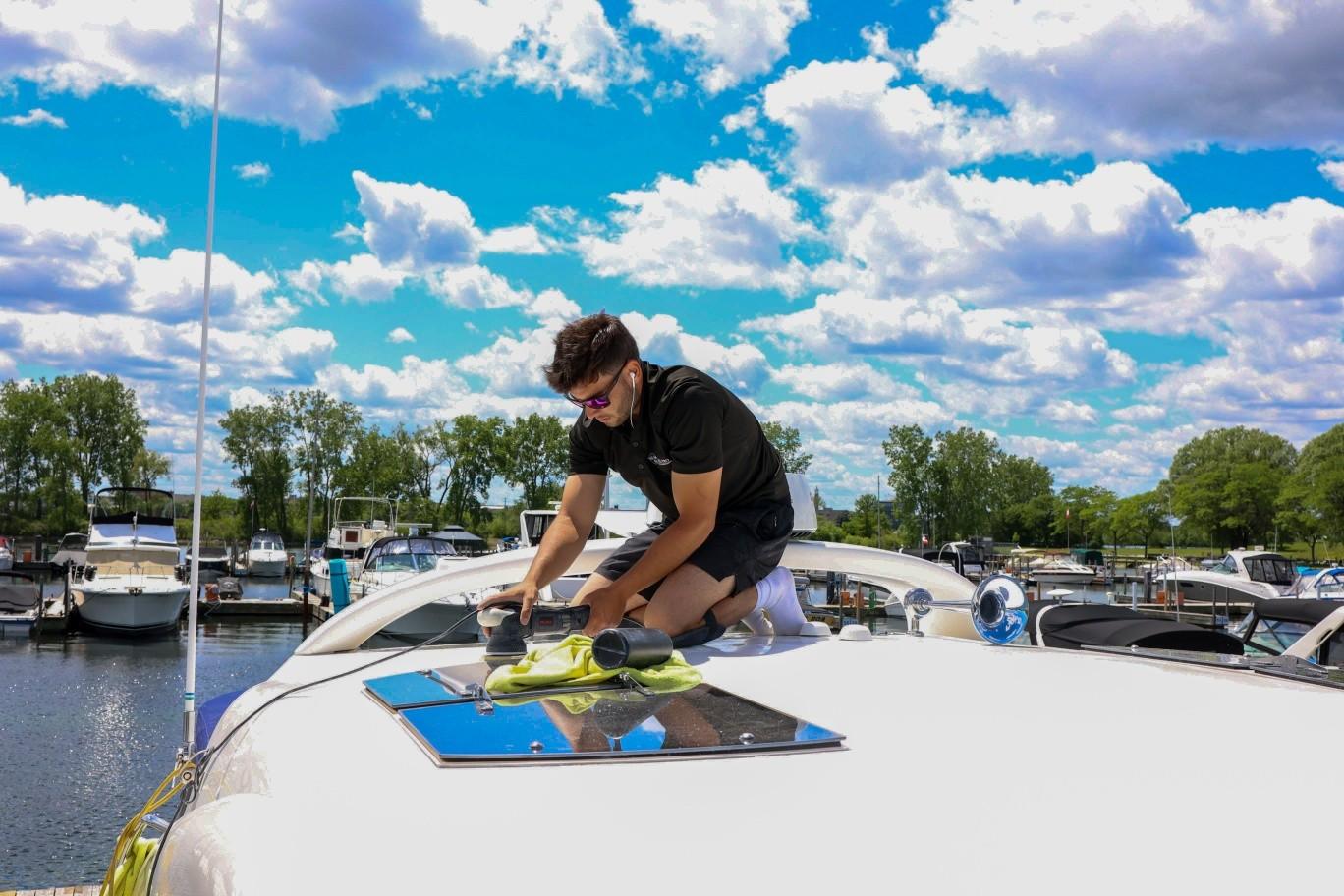
Boat Detailing
Wax & Sealant Protection
Protection for a boat that has nothing to correct. Brand new hulls and aluminum boats, washed and sealed.
What you get
Wax & Sealant Protection done right
This is the short service, and it is deliberately narrow. We wash the topside and the hull, then apply the sealant of your choice to protect what is already there. It suits two boats and only two: one that is genuinely new, and an aluminum one. Here is the part most places will not tell you. Fibreglass is porous, so if there is any oxidation on the surface at all, a sealant sinks down into it instead of sitting on top, and you have paid for protection you did not get. On a boat like that the honest answer is our Polish & Wax, which corrects the surface first and then seals it. Aluminum is different, because it has no pores for the sealant to disappear into. A thirty year old aluminum boat that has never been polished can still take a coating. It will not come out looking new, but it will be protected, and we will say so before you book rather than after.
New Boats
Protect the finish before the first season takes it.
Aluminum Hulls
No pores, so a sealant works at any age.
Full Wash First
Topside and hull, so the sealant goes onto a clean surface.
We Will Say No
Any oxidation and we send you to Polish & Wax instead.
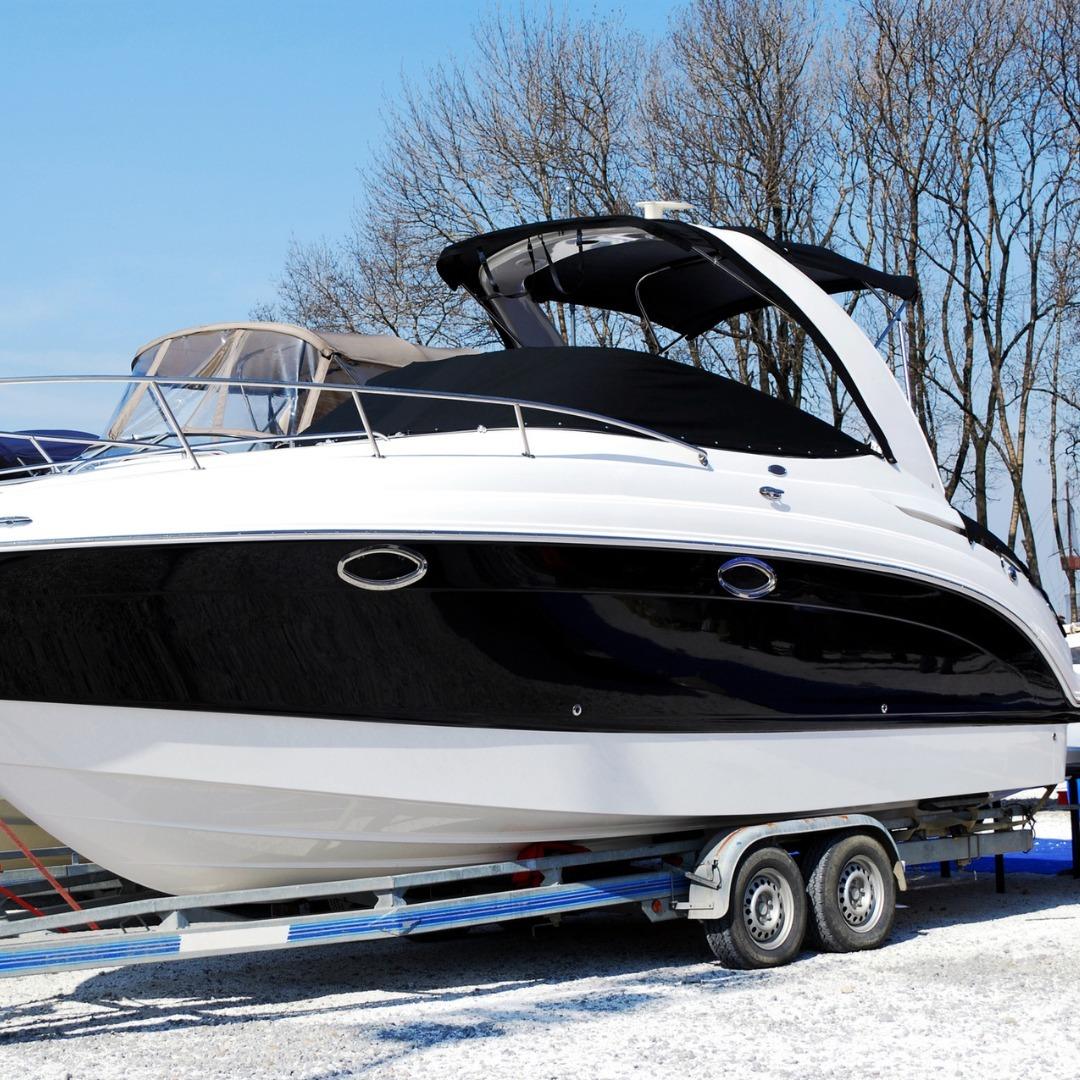
Wax & Sealant Protection
The honest limits of a sealant, and the boats it genuinely suits
A wax or a sealant sits on top of the gel coat as a sacrificial layer. It makes the surface easier to clean and takes the ultraviolet hit instead of the material underneath, and on the right boat it is excellent value for what it costs. On the wrong boat it is close to worthless, and the difference between the two is not subtle. This is the shortest service we offer and the one we turn down most often, because the conditions it needs are specific and a sealant applied outside them does not do the job it was bought to do.
Porosity is the whole story
Fibreglass with an intact, smooth surface gives a sealant something to lie on. Fibreglass that has oxidised does not: the surface has opened up into loose chalky material, so the product sinks into it rather than forming a layer over it. You get very little protection, almost no gloss, and a bill for both. This is the most common way boat owners waste money on detailing, and it usually happens because nobody told them the surface had to be corrected first.
Aluminum behaves completely differently
Aluminum has no pores for a sealant to disappear into, which changes the calculation entirely. A thirty year old aluminum boat that has never been touched can still take a coating and get real protection out of it. Set expectations correctly though: nothing is being removed and nothing is being restored, so it will not come out looking like a new boat. It will be clean, and it will be protected from what the water and the air do to it.
Why boat protection does not last like car protection
A boat takes a harder life than a car in the same climate. It sits in unshaded ultraviolet for whole days, it is surrounded by light reflecting off the water which effectively doubles the exposure, and it is repeatedly wetted and dried with mineral-bearing water. Protection that would run most of a year on a car in a driveway is doing well to hold a season on a hull. That is normal rather than a product failing.
Where it makes the most difference
Horizontal surfaces take the worst of it, because they face the sun directly and hold standing water after rain. Decks, the foredeck, hard tops and the tops of the gunwales will always degrade before the hull sides do, and it is common for a boat to need attention up top well before anything below the rub rail looks tired. Anywhere water pools and dries is where mineral spotting starts, and that is where a sealant earns its keep.
What Customers Say
Trusted by Boat Owners
Brian M
Posted on Google“Noah and the boys from All Pro Detailing did an amazing job on my boat. Prior to their efforts she was experiencing some heavy oxidation. Their results exceeded my expectation. I would not hesitate to recommend these gentlemen to anyone.”
Craig Huizenga
Posted on Google“Noah and his guys did a great job. My 2004 Trophy looks like new. Top side was very chalky but not now. Photos don't do justice! Thanks again.”
Anne Marie Bechard
Posted on Google“The amazing detail job on our 1993 Rinker boat definitely brought it back to life. The guys were professional, prepared and did a great job cleaning up!”
Wax & Sealant Protection FAQs
Wax & Sealant Protection, answered
Is this the right service for my boat?+
Only if there is genuinely nothing to correct. This service is for a boat that is close to new, or an aluminum boat. If your hull has any chalkiness at all then this is the wrong package and we will say so: what you want is Polish & Wax, which fixes the surface first and then seals it. We would rather turn down the smaller job than take your money for something that will not work.
Why does oxidation stop a sealant from working?+
Because fibreglass is porous. A sealant is meant to sit on top of a smooth surface as a sacrificial layer, but where gel coat has oxidised the surface is no longer smooth, it is open and chalky. The product sinks into that instead of laying over it, so you get very little protection and almost no shine, and you have paid full price for both. This is the single most common way boat owners waste money on detailing.
Can you seal an aluminum boat?+
Yes, and age does not matter much. Aluminum has no pores for the product to disappear into, so a thirty year old aluminum boat that has never been touched can still take a coating and get real protection from it. Set your expectations correctly though: it will not come out looking like a new boat, because there is no oxidised layer being removed. It will be clean and it will be protected.
Should I do this before winter storage?+
On a new boat, yes. Going under the cover sealed means moisture and staining have a barrier between them and the gel coat, and spring is a wash rather than a job. On a boat that has already oxidised, spend the money on correcting it instead. Sealing over a dull hull in October just means you uncover a dull hull in April.
Ready when you are
Ready for a Detail That Turns Heads on the Water?
Your Boat, Brought Back to Life.