
Boat Detailing
Polish & Wax
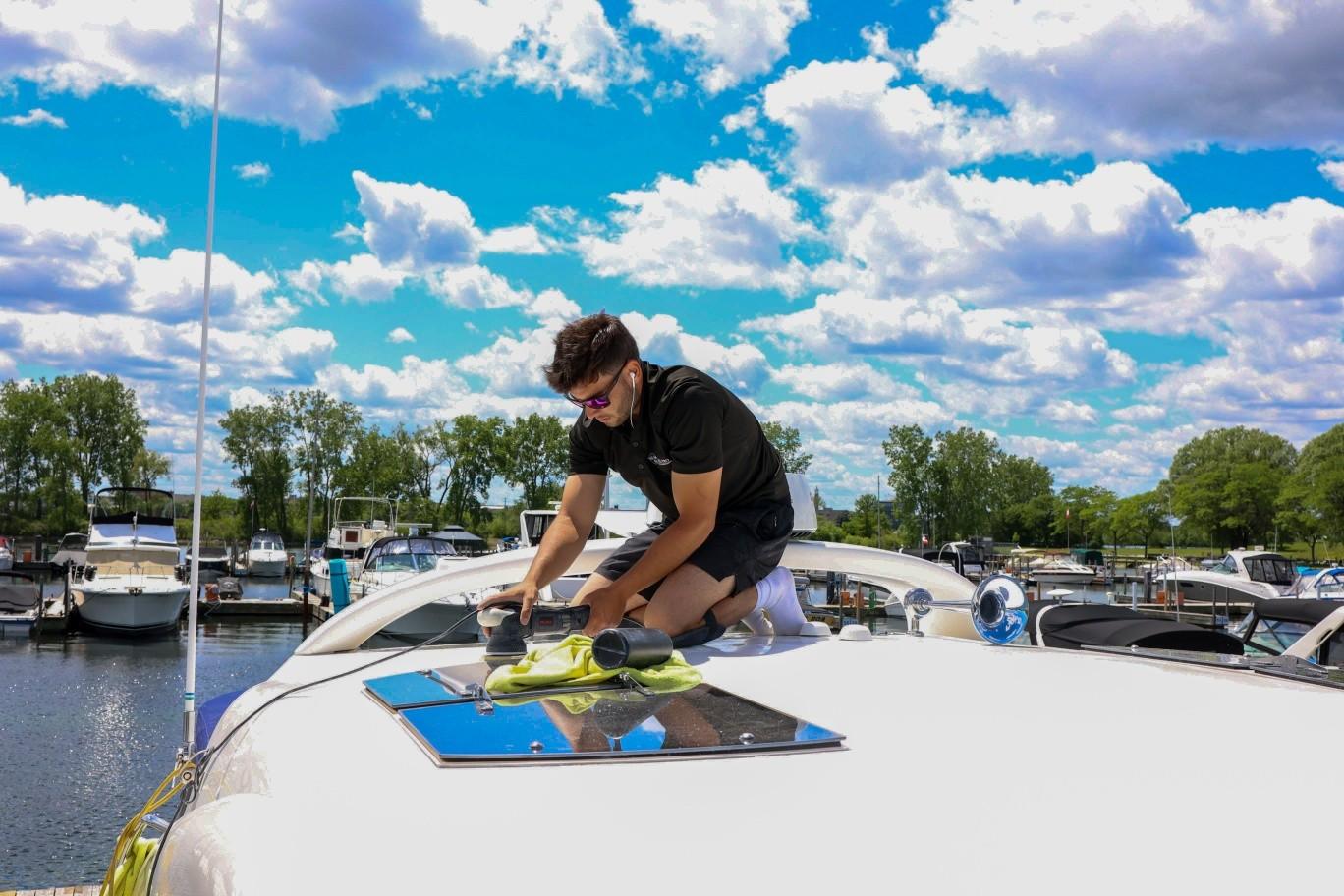
Our most requested service, and around 80% of the work we do. Machine compound, machine polish, then the sealant of your choice.
What you get
Polish & Wax done right
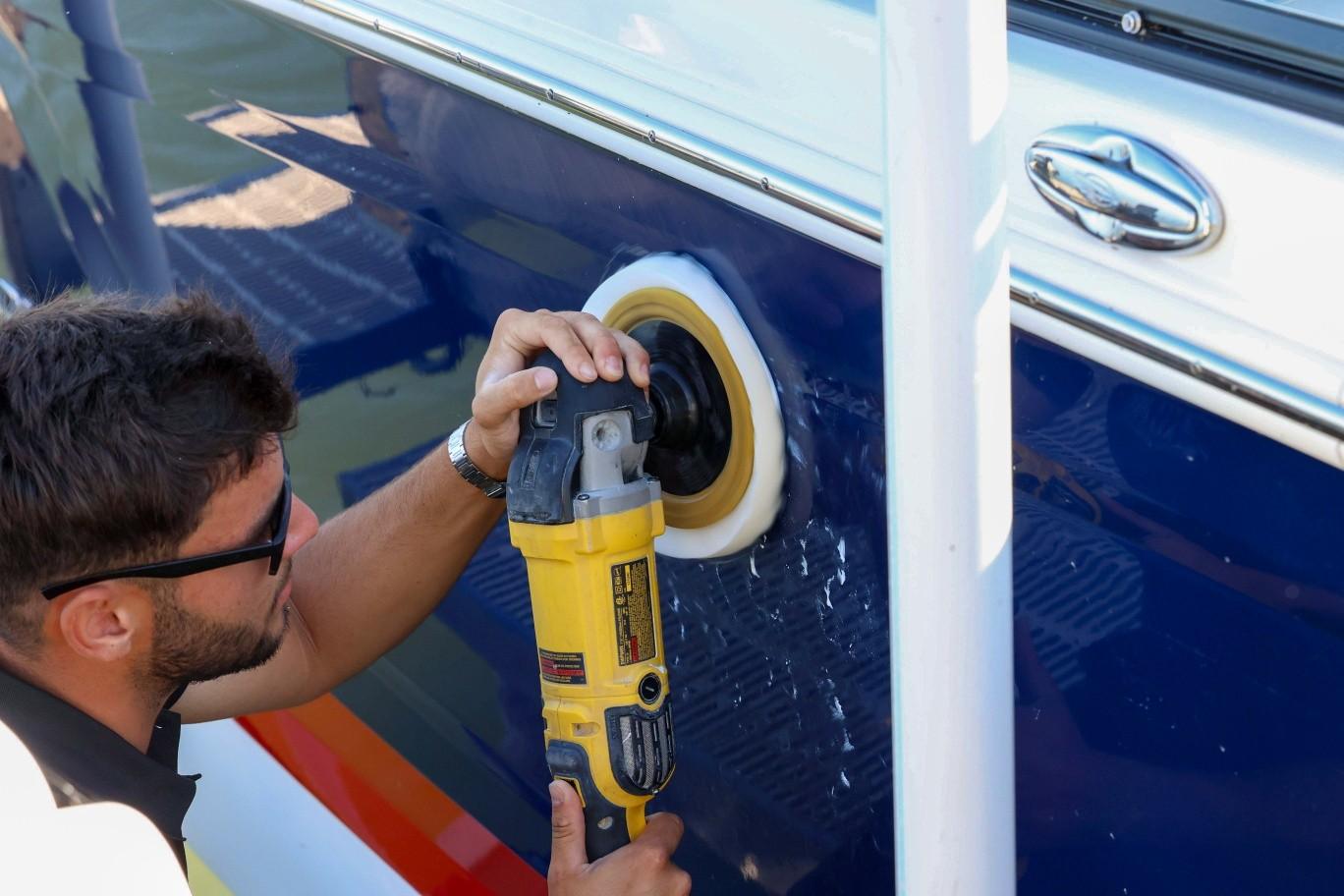
This is the one most boats need. If your hull has gone chalky and white but the gel coat underneath is still sound, this is the package that brings it back. It is three stages, and the order is not negotiable. First a compound, using an abrasive liquid and a foam cutting pad on a rotary polisher, which is what removes the oxidation along with dock rash and light scratching. Then a machine polish, using a completely different liquid, a non-abrasive foam pad and a dual action machine, because compounding on its own leaves fine circular marks that you will not see at midday and will see clearly the moment the sun drops. Then the residue comes off and the sealant goes on, either a carnauba or a ceramic, whichever you prefer. It is the setup we have run on well over 150 boats.
Two Stages, Not One
Compound then polish. Most detailers stop after the first.
No Five O'Clock Shadow
The dual action pass removes the swirls compounding leaves.
Foam Pads, Not Wool
Less heat on your gel coat, and no risk of burning it.
Your Choice of Sealant
Carnauba or ceramic, applied to a finished surface.
Polish & Wax
Two machines, two pads, two liquids, and why it takes all of them
Compounding and polishing get used as if they were the same word and they are two different operations with opposite purposes. Compounding cuts: a coarser abrasive removes a thin layer of oxidised surface and takes the defects away with it. Polishing refines: a much finer abrasive removes the marks the compound left and brings the gloss up. Compounding without polishing leaves a boat that is bright at noon and covered in fine circular marks by six. Polishing without compounding on a genuinely oxidised hull does very little at all. This package is both, in that order, and then a sealant over the top.
The vinegar step, when a boat needs it
Some boats arrive clean enough to start on. Others come covered in the black dots that spiders leave, bird mess, and general dock film that a compound alone will not lift. When that is the case the whole boat gets sprayed down with a fifty-fifty mix of vinegar and water first, which breaks that material down so machine work starts on a genuinely clean surface. It is not a pressure wash and it is not charged as a separate job. It is simply what the boat needed that day.
Foam compounding pads instead of wool
Wool pads cut quickly and generate a great deal of heat, and heat is what burns gel coat. A burn is a far more expensive problem than the oxidation you called about. Foam compounding pads breathe and let air through, so the surface stays cooler through the pass. On a boat polished two or three seasons ago that simply needs bringing back, that extra aggression was never needed in the first place, and reaching for it anyway is how avoidable damage happens.
The five o'clock shadow
An abrasive pad spinning in one direction under heat leaves very fine circular marks in its wake. They are close to invisible with the sun overhead, which is exactly why a compound-only job passes inspection on the day. When the sun drops to five or six and runs parallel with the hull, every one of them shows, and the boat looks hazed rather than deep. Detailers call it the five o'clock shadow, and it is the single most common thing a rushed job leaves behind.
Why the second machine is a different machine
The polishing stage uses a dual action polisher rather than a rotary. It oscillates instead of spinning in one fixed direction, so it refines a surface rather than cutting it, and that motion is what lifts the circular marks out instead of adding more. It runs a non-abrasive foam pad and a fine polishing liquid that is not trying to remove oxidation at all. Its only job is clarity. It is the setup we have run on well over 150 boats.
What is included, from the waterline up
A standard polish covers the hull sides from the waterline up to the rub rail, and everything above it: the top deck, the arch, and the transom. The belly below the waterline is not included, because a boat that sits in the water goes yellow again within weeks and a finish down there is money badly spent. Plenty of owners take only one band, the top half or only the hull sides, and if that is what your boat actually needs we will say so.
Why protection goes on last, and what decides how long it lasts
Every compound and polish is an abrasive, so applying protection and then correcting the surface removes the protection you just applied. Correction first, then a carnauba or a ceramic goes onto a surface that is finished, clean and dry. From there it is about a year, and one to two if the boat is looked after. The variable is not the product, it is whether the boat gets washed through the season before contaminants have time to bake into the surface.
Polish & Wax Results
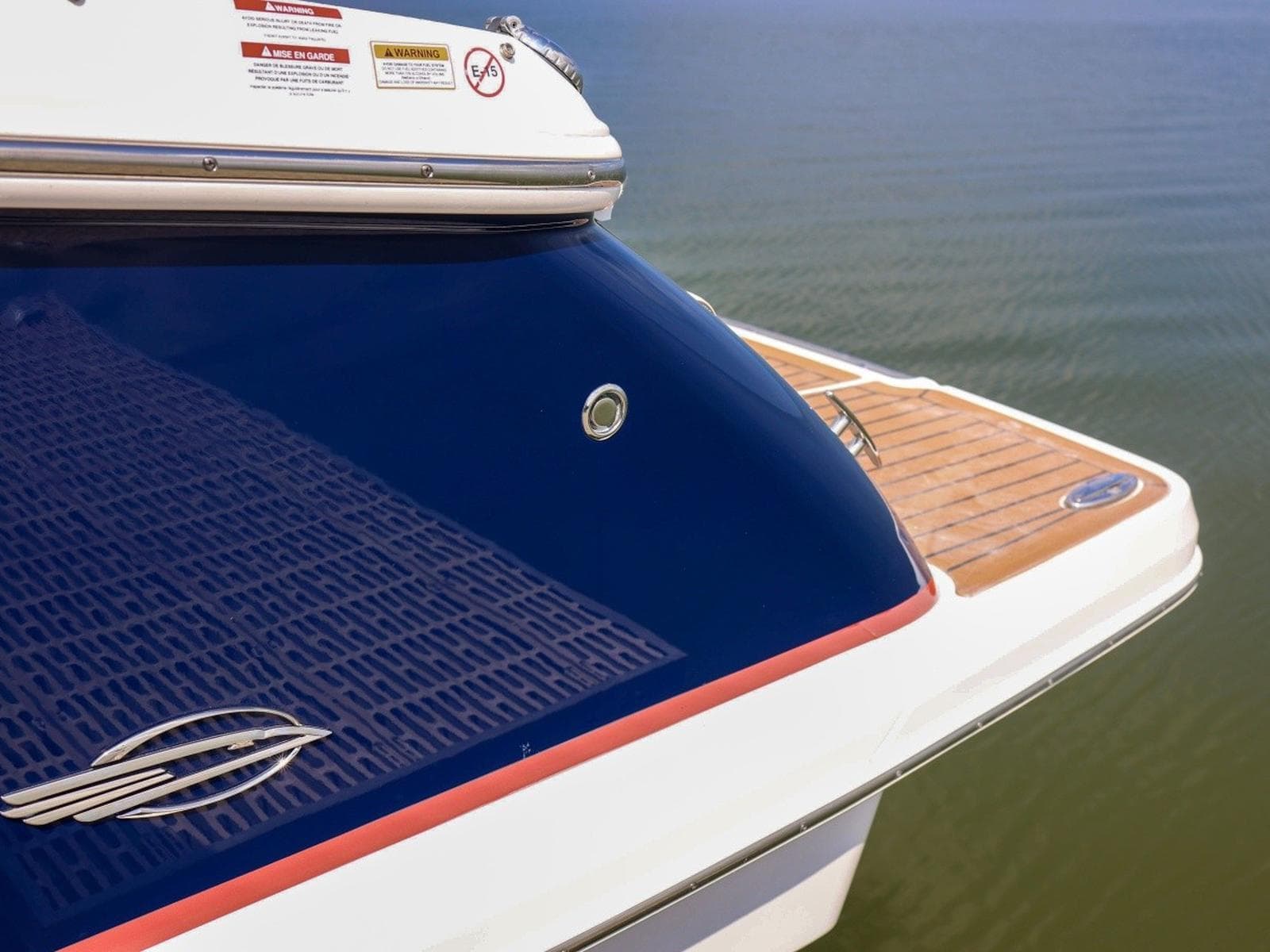
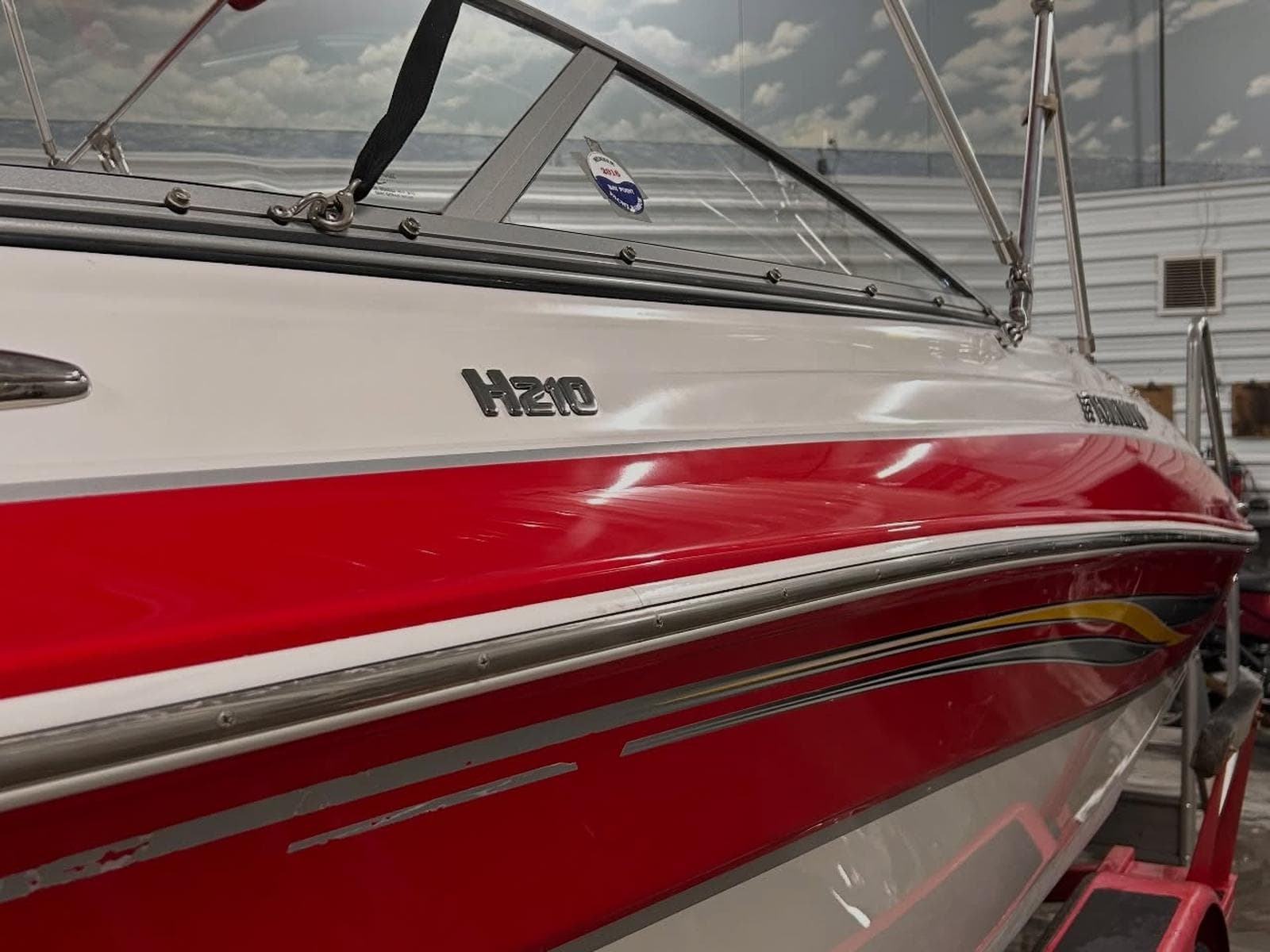
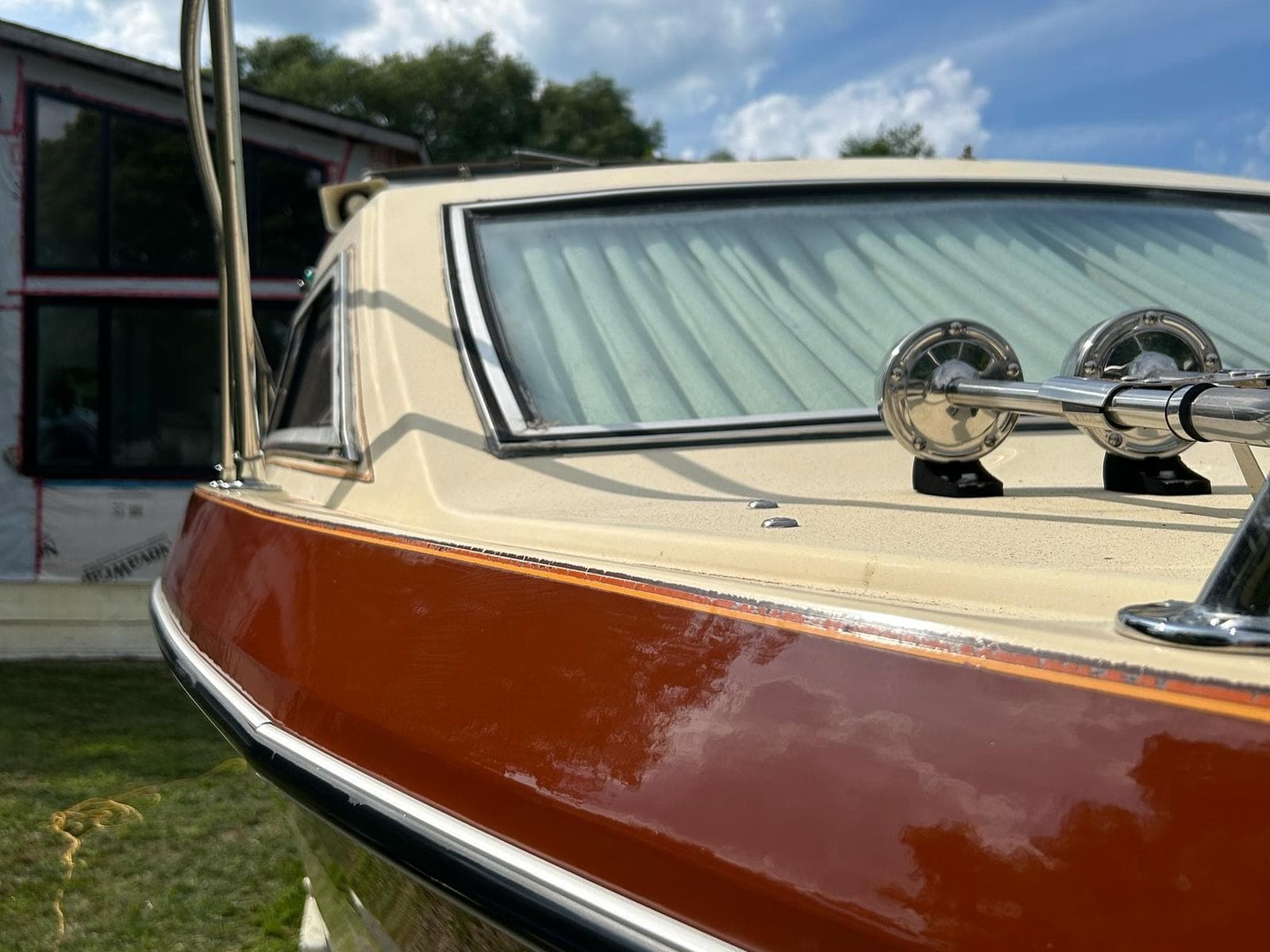
Polish & Wax, before and after
Drag the slider across to reveal the before. Real boats from around Southwestern Ontario, no staging.
 After
After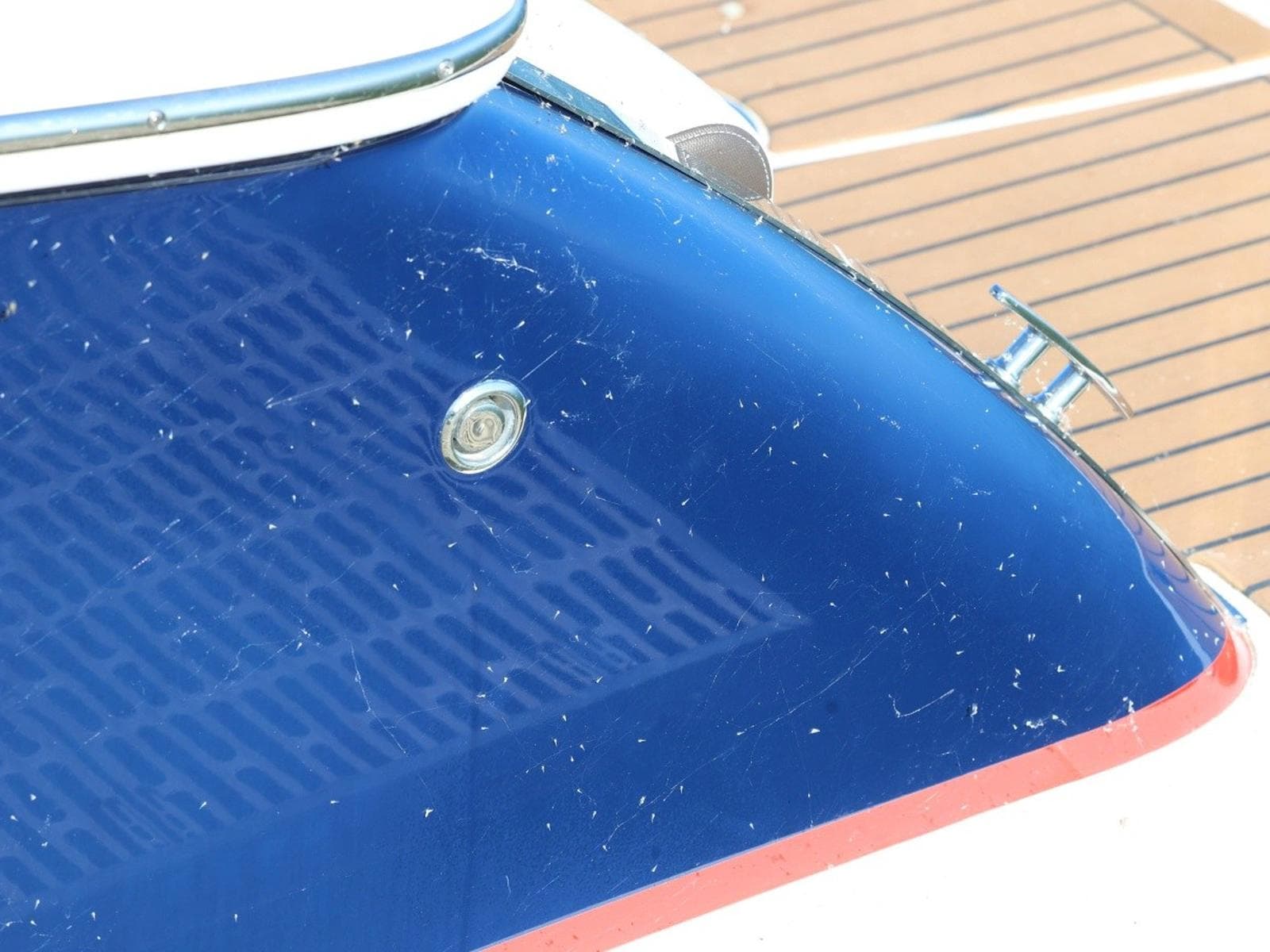 Before
 After
After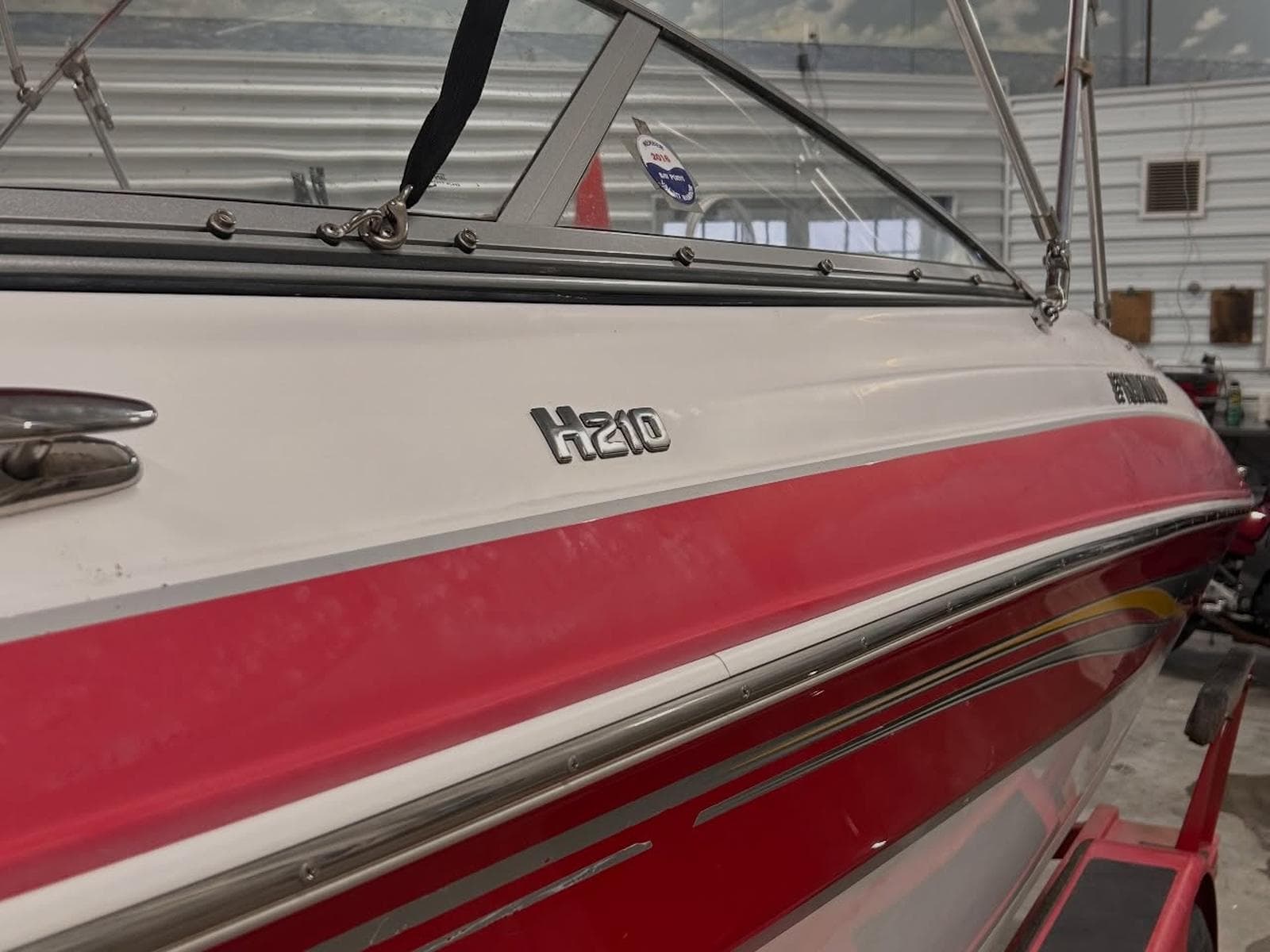 Before
 After
After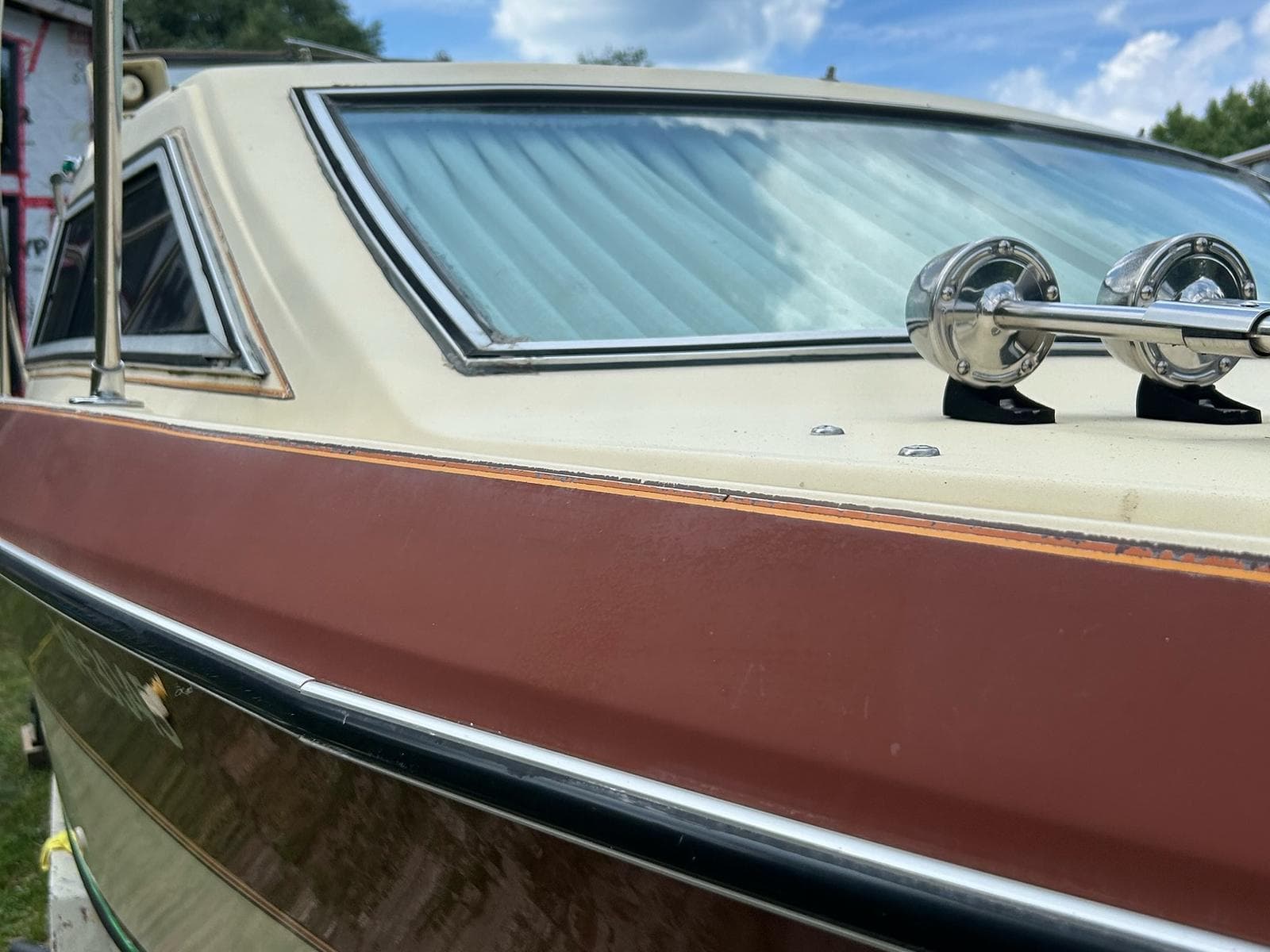 Before
What Customers Say
Trusted by Boat Owners
Brian M
Posted on Google“Noah and the boys from All Pro Detailing did an amazing job on my boat. Prior to their efforts she was experiencing some heavy oxidation. Their results exceeded my expectation. I would not hesitate to recommend these gentlemen to anyone.”
Craig Huizenga
Posted on Google“Noah and his guys did a great job. My 2004 Trophy looks like new. Top side was very chalky but not now. Photos don't do justice! Thanks again.”
Anne Marie Bechard
Posted on Google“The amazing detail job on our 1993 Rinker boat definitely brought it back to life. The guys were professional, prepared and did a great job cleaning up!”
Polish & Wax FAQs
Polish & Wax, answered
Will polishing remove my scratches and dock rash?+
Here is the test we give every customer, and you can do it yourself right now. Run a fingernail across the mark. If your nail does not catch, we can almost certainly take it out: light scratching, dock rash, the black rubber and paint transfer from a bolt or a piling rubbing against the hull. If your nail does catch, the damage has gone through the surface and no amount of compounding will remove it. That needs gel coat repair, and we will tell you that honestly rather than polish it and hope.
Why do you use two machines instead of one?+
Because they do opposite jobs. The compound stage uses a rotary polisher with a cutting pad, and that is what actually removes the oxidation. But an abrasive pad spinning under heat leaves very fine circular marks behind it. At midday you will never see them. When the sun drops to five or six o'clock and goes parallel with the hull, you see every one, which is why detailers call it the five o'clock shadow. The second stage uses a dual action machine with a non-abrasive pad, and that is the one that removes those marks. Skipping it is how a boat ends up shiny at noon and disappointing at dinner.
Do you use wool pads?+
No, we use foam. Wool cuts fast and generates a great deal of heat, and heat is what burns gel coat, which is a far more expensive problem than the one you called us about. Foam compounding pads breathe and let air through, so the surface stays cooler. On a boat that was polished two or three years ago and simply needs bringing back, that extra aggression is not needed in the first place.
How long does the sealant last?+
About a year on the carnauba, and one to two years if the boat is looked after. The variable is not really the product, it is you. A boat that gets washed through the season, so contaminants come off before they bake in, holds its finish for a long time. A boat left sitting in a slip all summer without a wash will start going chalky again much sooner, whatever went on top of it.
Ready when you are
Ready for a Detail That Turns Heads on the Water?
Your Boat, Brought Back to Life.