
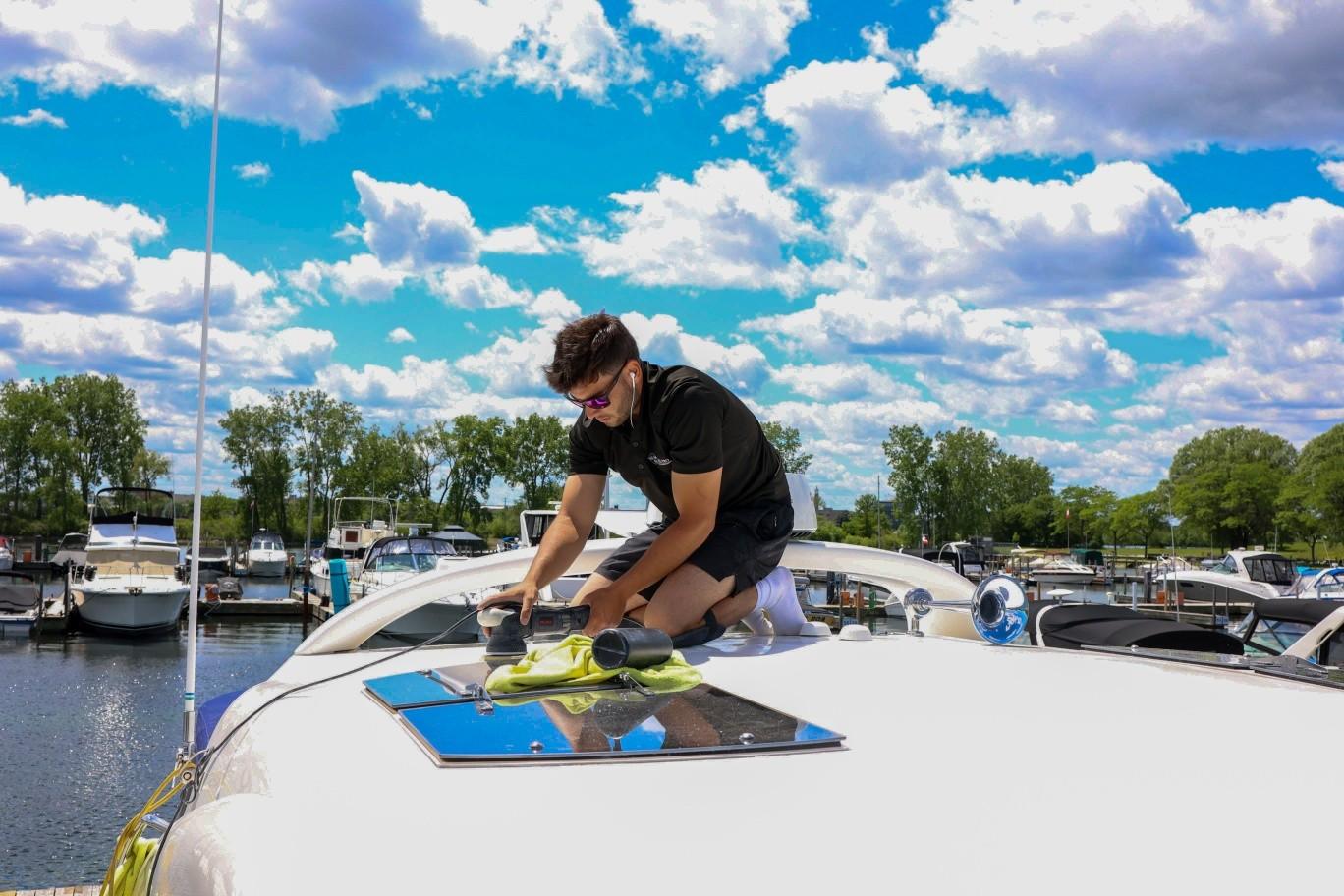
The Revival Package
Gel Coat Restoration
For a boat that is past what compounding alone can fix. We sand the oxidation off first, then run the full polish and seal.
What you get
Gel Coat Restoration done right
The Revival is our Polish & Wax with a sanding stage in front of it. Some boats are simply too far gone for a compound to reach: years of sun with no protection, never polished, chalk deep enough that a foam pad will not cut it. Dark hulls show it worst. We start with a test spot on your actual boat to work out which grit it needs and whether it wants dry or wet sanding, because that answer changes from hull to hull and guessing it is how gel coat gets ruined. A badly oxidized boat can run four passes, starting as coarse as 600 grit and finishing wet at 3000, and only then does it go into the same compound, polish and sealant as the Polish & Wax. You will almost certainly not know whether your boat needs this, and you are not supposed to. It is our call to make standing in front of it, and we will tell you when it does not.
Test Spot First
We prove the right grit on your hull before committing.
Staged Wet Sanding
Up to four passes, 600 grit through 3000.
Deep Oxidation Gone
Reaches chalk that compounding cannot touch.
Then Fully Finished
Compound, polish and sealant over the sanded surface.
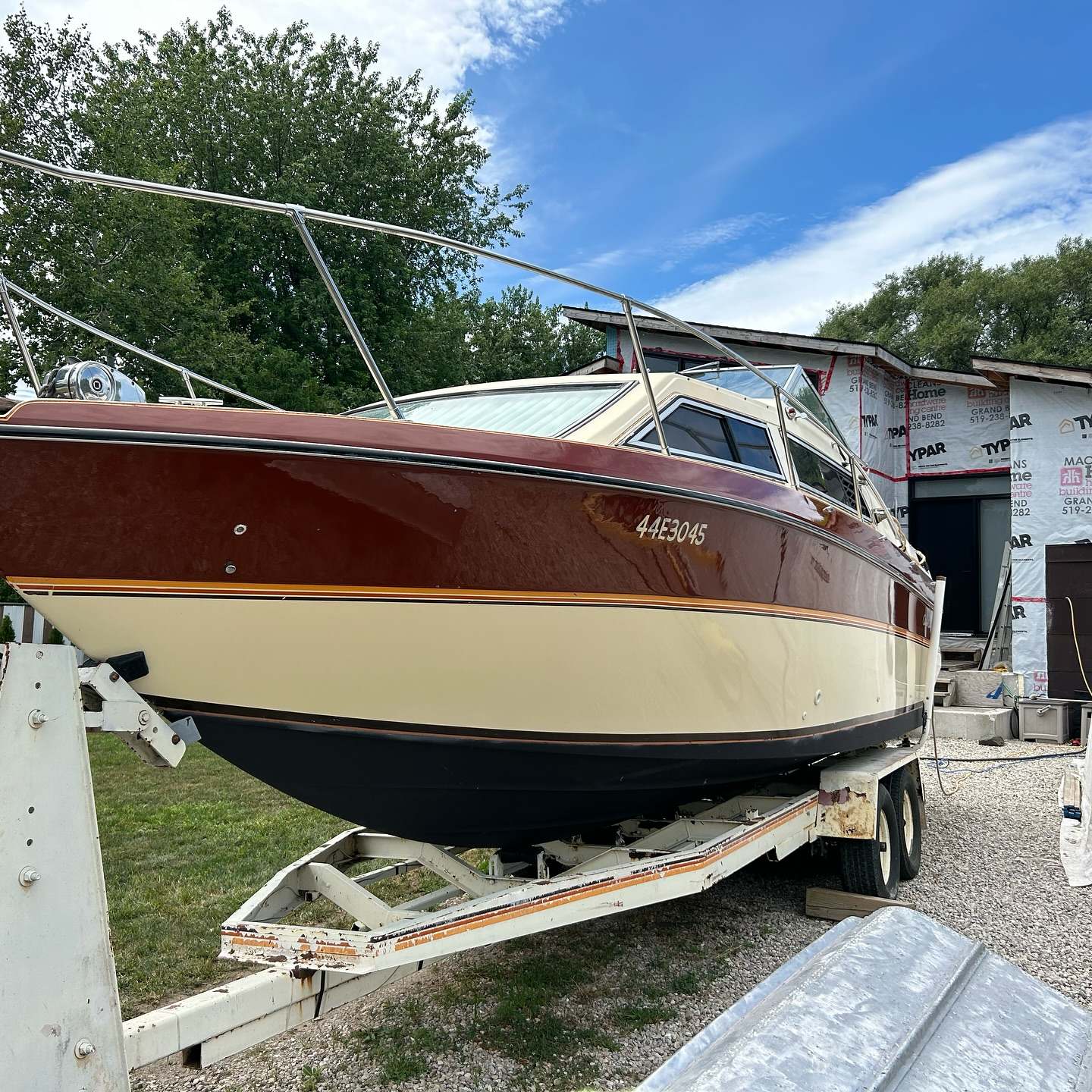
Gel Coat Restoration
What oxidation is, and why sanding is sometimes the only honest answer
Gel coat is a pigmented resin layer and, unlike car paint, it has no clear coat over it. Ultraviolet light breaks the resin down at the surface and releases the pigment as a loose chalky powder. That is what oxidation physically is: the colour has stopped being locked into a smooth surface and started sitting on top of a rough one. It is why a badly oxidised hull leaves white on your hand and reads flat and pale rather than dirty. Past a certain depth, no pad and no liquid will reach it, and the surface has to come down to sound material before anything else is worth doing.
The white-hand test
Wipe a dry hand or a dark cloth down the hull side. If it comes away chalky, that is released pigment, and the boat is oxidised rather than dirty. Worth doing before you ask anyone for a quote, because it changes what the job is. Dirt is a wash. Oxidation is a correction, and a correction is measured in hours rather than minutes.
Why we do a test spot before we sand anything
We work a small area of your actual hull first to find out what it responds to. That tells us the grit to start at and whether it wants dry or wet sanding, and those answers genuinely change from boat to boat depending on age, colour, and how much sun it has taken. The alternative is starting on a guess, and on a surface that does not grow back, a guess is not a professional position to take.
What the grit progression actually means
A heavily oxidised hull can take four passes: an aggressive start as coarse as 600 grit to take the dead layer off, then 1000, then wet sanding at 2000 and 3000 to refine what the coarse passes left behind. Each step exists to remove the scratches of the step before it. Stopping halfway leaves a surface that is flat but hazed, which is why sanding is never the last operation. Compound, polish and sealant still follow it.
Gel coat is thick, but it is finite
There is meaningfully more gel coat to work with than there is clear coat on a car, which is why hulls that look beyond saving so often come back. But it was laid down once at the factory and every correction removes a little. That is the real reason a responsible detailer starts with the least aggressive step that will work rather than the fastest, and why a hull that has been heavily compounded several times has less margin left than its age suggests.
When restoration stops being the answer
If oxidation has gone deep enough that correction would cut through to the laminate beneath, no amount of sanding fixes it, and the honest answer is paint or a gel coat respray rather than a detail. That call can only be made looking at the actual boat, which is another reason a quote given over the phone for heavy oxidation is a guess. It costs nothing to have someone come and look.
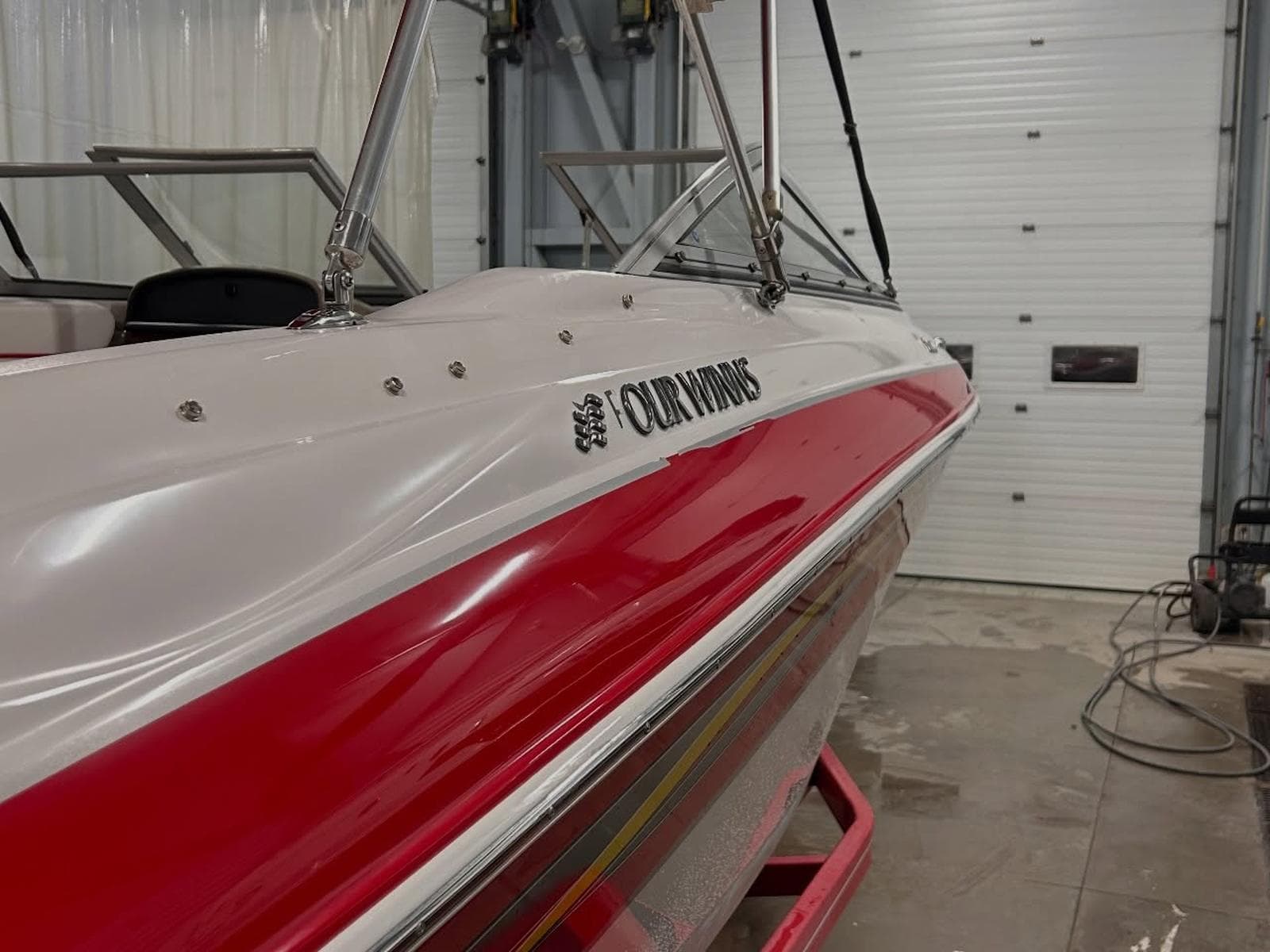
Gel Coat Restoration Results
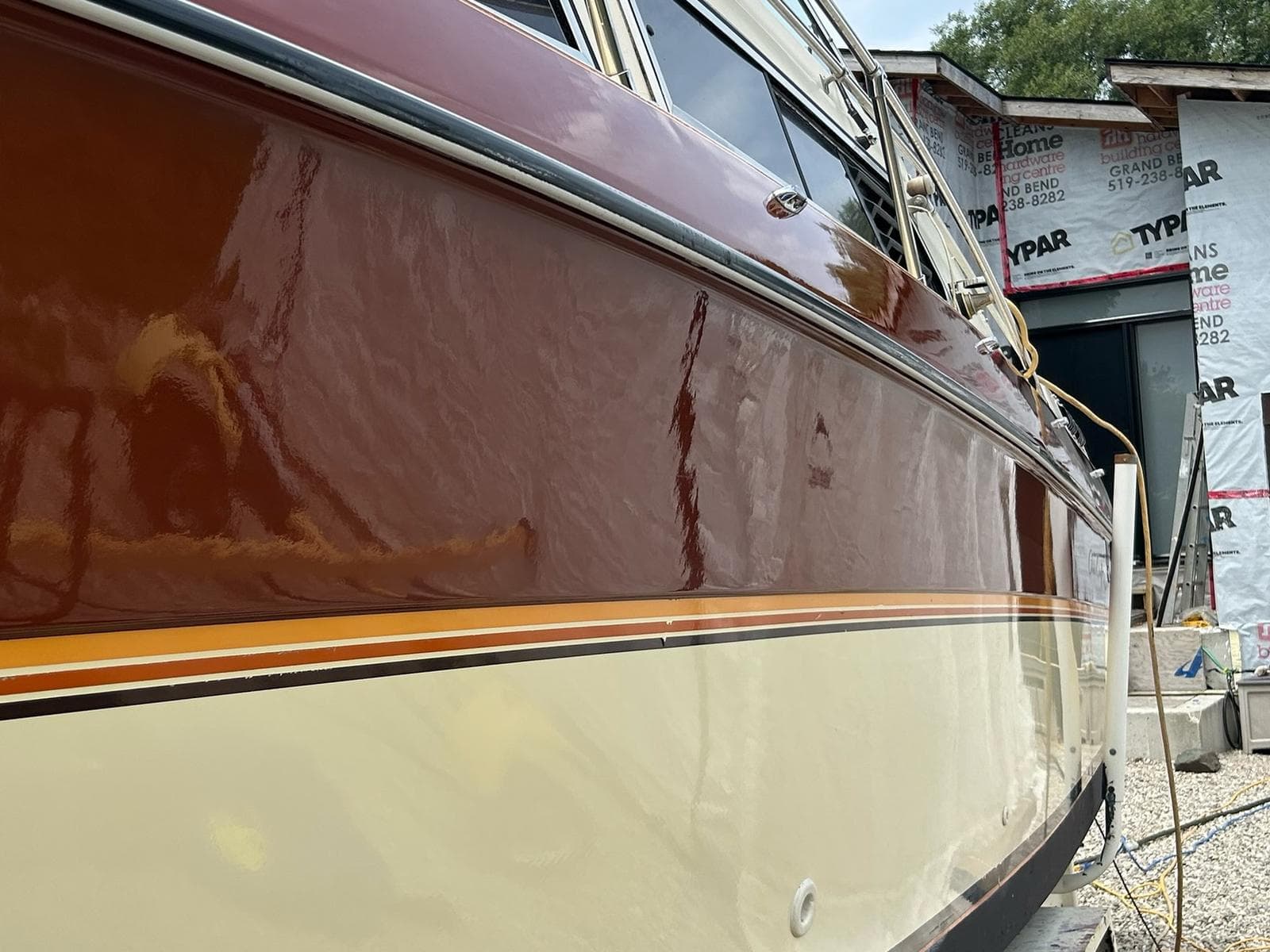
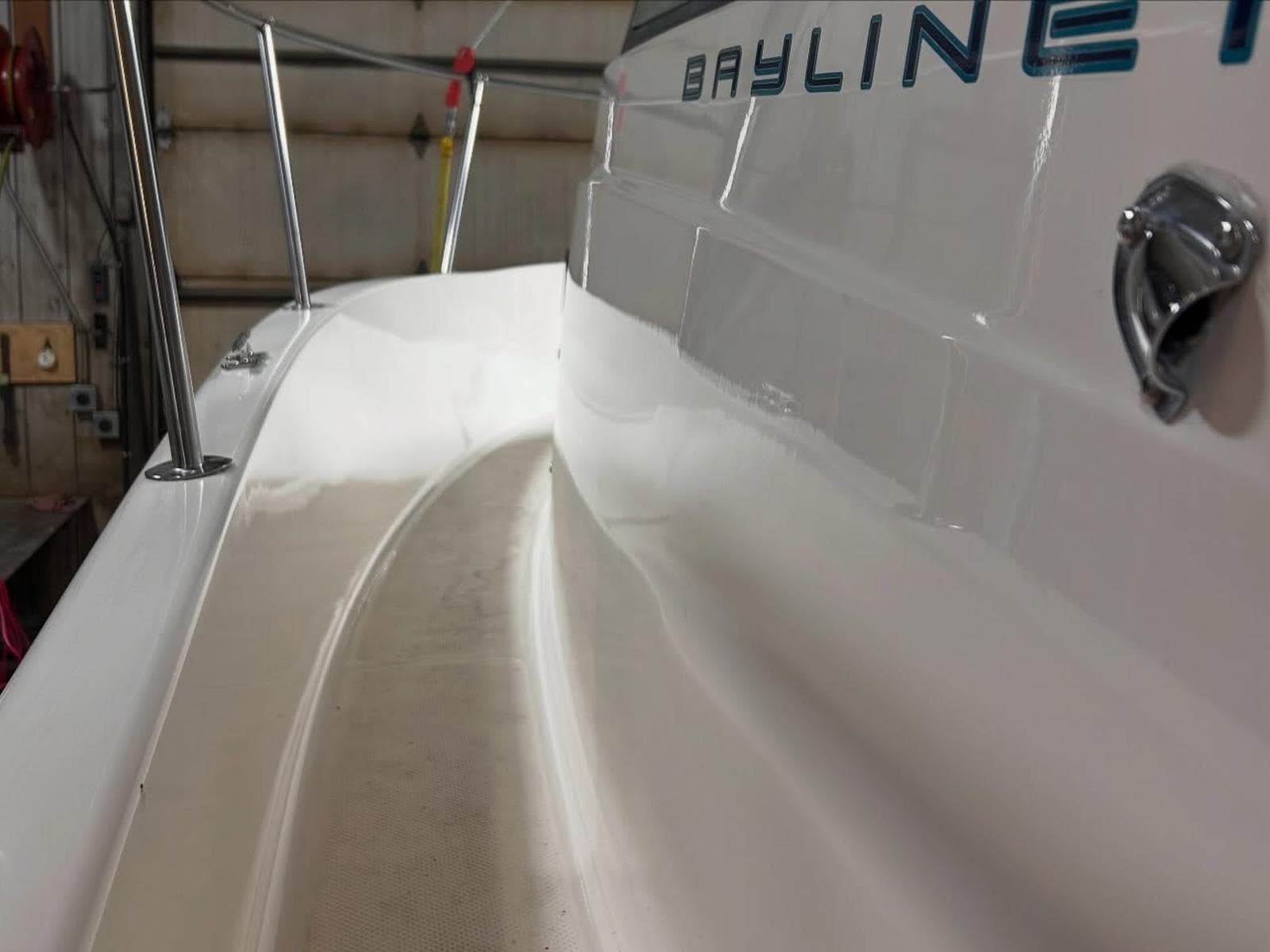
Gel Coat Restoration, before and after
Drag the slider across to reveal the before. Real boats from around Southwestern Ontario, no staging.
 After
After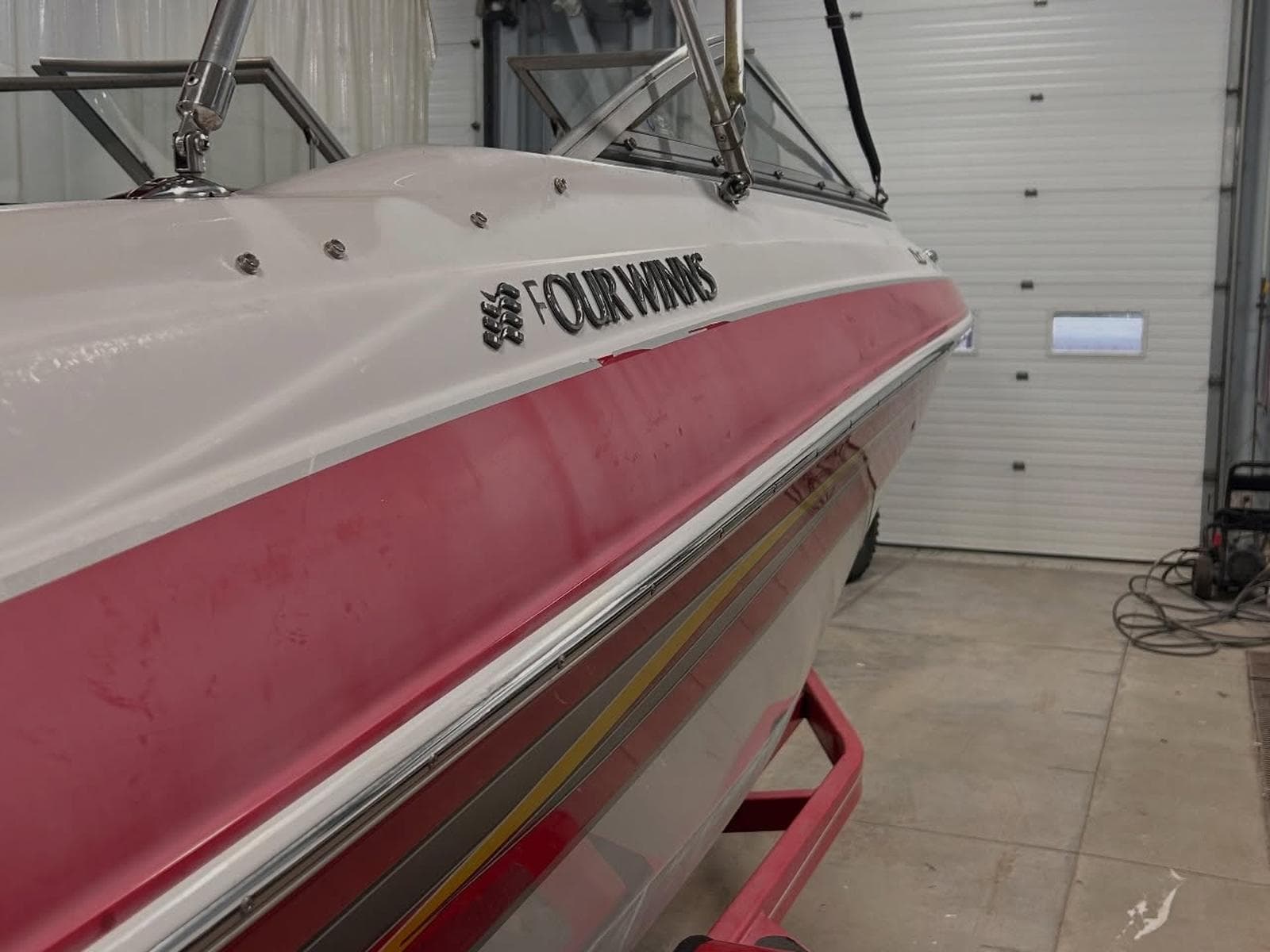 Before
 After
After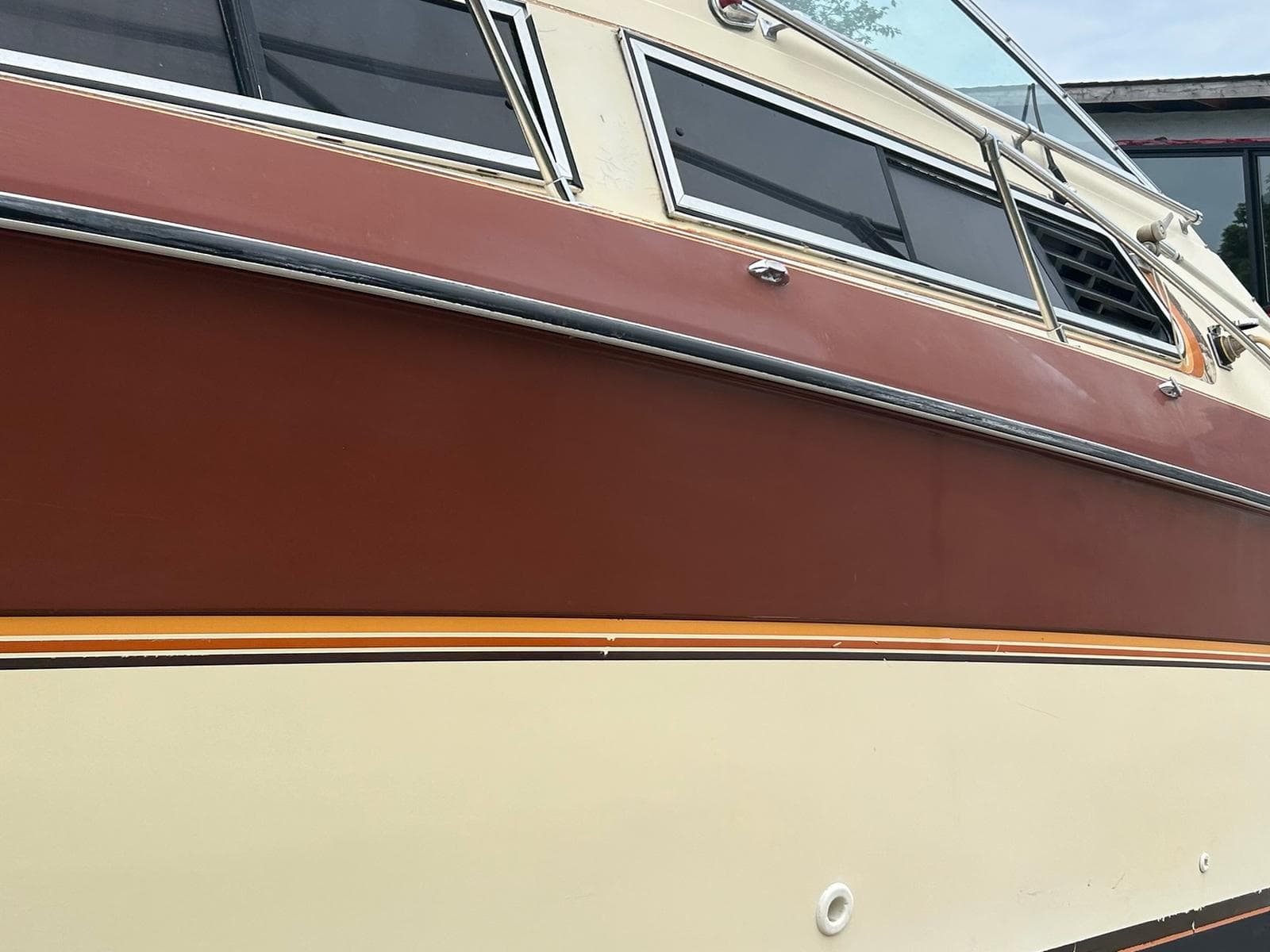 Before
 After
After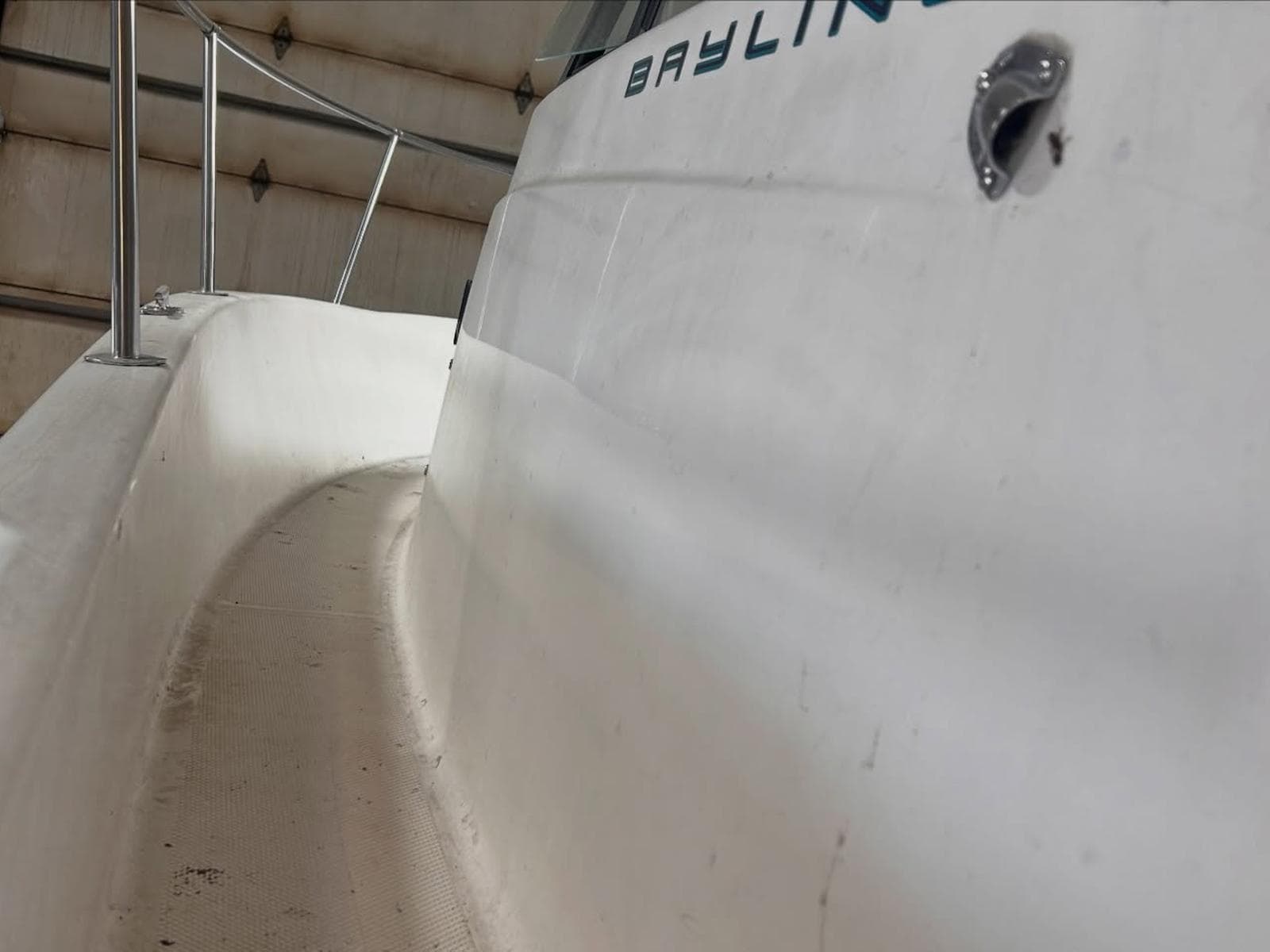 Before
 After
After Before
What Customers Say
Trusted by Boat Owners
Brian M
Posted on Google“Noah and the boys from All Pro Detailing did an amazing job on my boat. Prior to their efforts she was experiencing some heavy oxidation. Their results exceeded my expectation. I would not hesitate to recommend these gentlemen to anyone.”
Craig Huizenga
Posted on Google“Noah and his guys did a great job. My 2004 Trophy looks like new. Top side was very chalky but not now. Photos don't do justice! Thanks again.”
Anne Marie Bechard
Posted on Google“The amazing detail job on our 1993 Rinker boat definitely brought it back to life. The guys were professional, prepared and did a great job cleaning up!”
Gel Coat Restoration FAQs
Gel Coat Restoration, answered
How do I know if my boat needs this instead of a polish?+
Honestly, you probably do not, and you are not expected to. Customers are not detailing pros and telling the difference between a boat that needs a compound and one that needs sanding takes a trained eye standing in front of it. That is exactly what the free visit is for. We look at it, we tell you which one it is, and if the answer is the cheaper package then that is what we recommend.
What is a test spot, and why do you do one?+
Before we sand anything we pick a small area of your hull and work it, to find out what that specific boat responds to. It tells us which grit to start at and whether it wants dry or wet sanding. Every hull is different, and the difference between the right grit and a guess is the difference between a restored boat and one that needed more gel coat than it had. We are not willing to guess it.
Is sanding a boat safe?+
In the right hands and with the right grit, yes, and it is the only thing that reaches oxidation this deep. Gel coat is much thicker than the clear coat on a car, which is why hulls that look finished can come back. But it is a fixed amount laid down at the factory and it does not grow back, so the correct approach is the least aggressive step that will actually work, not the fastest one. That is why the test spot happens first.
How bad does a boat have to be?+
Think of a hull that has never been polished, has sat in the sun for years, and has gone visibly chalky and flat rather than just dirty. Dark coloured boats show it most dramatically. If a compound and polish can still reach it, we will use that instead and save you the sanding stage.
Ready when you are
Ready for a Detail That Turns Heads on the Water?
Your Boat, Brought Back to Life.